ScroogeFrog Shows How to Scale an iGaming Offer via Popunder & Push to 114M Impressions in the US and Cut Target CPA by 13%
Scaling an iGaming offer in the United States is one of the toughest challenges in performance marketing. With fierce competition, high clearing prices, and strict compliance, buying high-volume ad formats like Push and Popunder often results in severe budget bleed caused by bot networks, click farms, and accidental misclicks. Our primary objective was to leverage Realpush’s high-capacity US inventory to maximize verified user registrations, keep acquisition costs safely below the client’s $17.00 CPA ceiling, and safeguard the budget using our proprietary technology stack: Scroogefrog AI Antifraud combined with our in-house automated bidding engine.
1. Campaign Overview & Objectives
Before scaling, we agreed on clear unit-economics and delivery benchmarks for the US market:
- Vertical: iGaming
- GEO: United States (Tier-1)
- Campaign Duration: June 30, 2026 – September 16, 2026
- Target Conversion Event (CPA): User Registration (Sign-Up)
- Target CPA: $17.00
- Traffic Network: Realpush
- Ad Formats: Web Push Notifications & Popunder (Clickunder)
- Tech Stack: S2S Postback integration + Scroogefrog AI Antifraud + Our Automated Bidding
2. Market Challenges & Traffic Realities
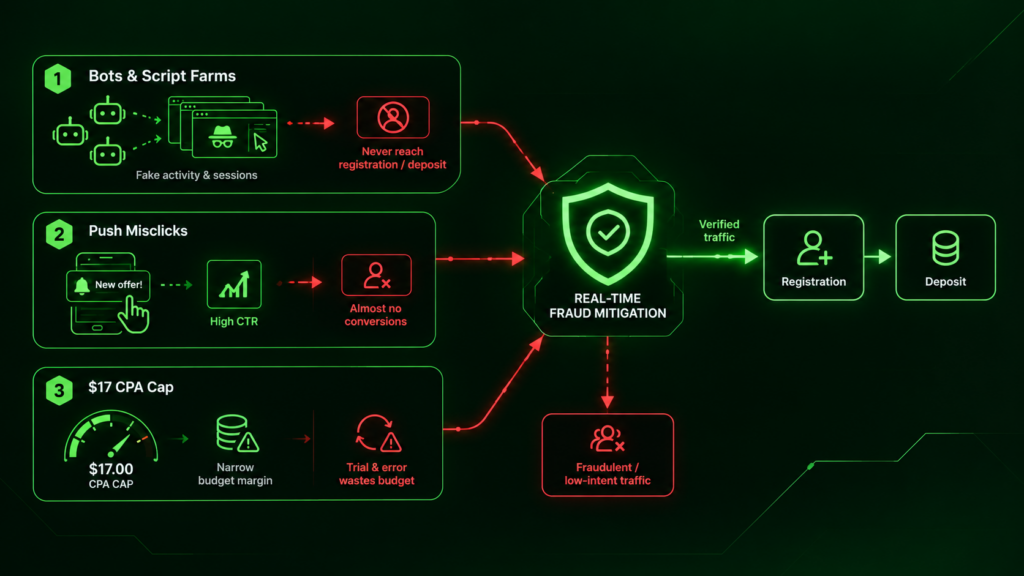
Running Push and Popunder in the US presents unique bottlenecks that can burn budgets in hours:
- Sophisticated Botnets: Tier-1 traffic attracts advanced headless scripts that emulate human micro-actions (scrolling, lingering on page) and generate fake, automated registrations.
- Cost of Misclicks: In high-volume formats, accidental clicks quickly burn ad spend while delivering zero registrations, bloating metrics and distorting auction models.
- Tight Margins: With a target CPA capped at $17.00 per registration, there was zero room for wasted ad spend. We needed real-time fraud mitigation on-site alongside dynamic bid optimization directly in the network.
3. Tracking Architecture & Technical Setup
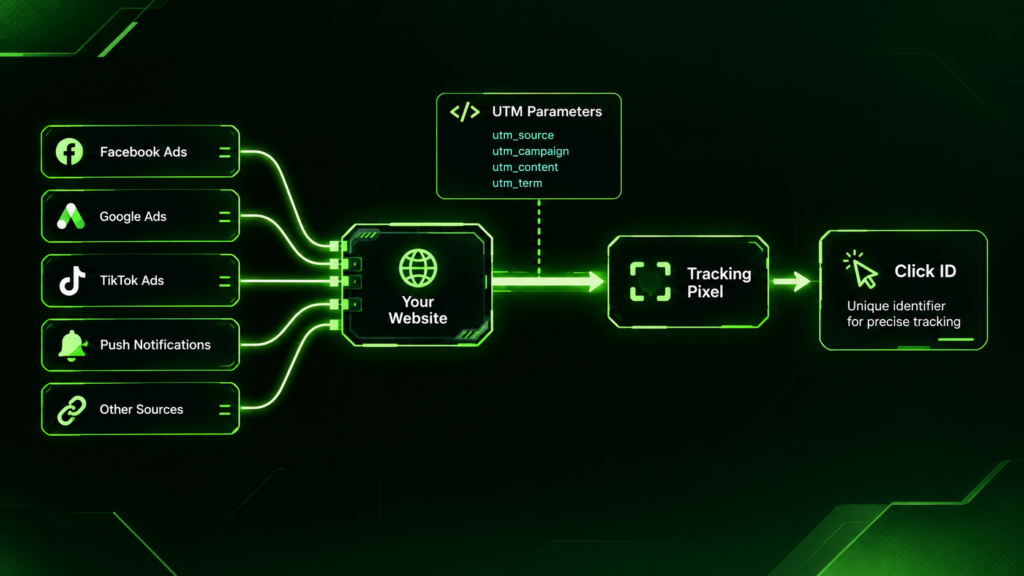
To maintain full transparency, rapid bid reaction, and granular multi-variable attribution, we engineered a resilient server-side tracking framework:
S2S Postback Pipeline: Client-side tracking pixels were intentionally bypassed to prevent data loss across mobile web sessions. Whenever an ad impression converted into a click or popunder trigger, Realpush dynamically injected a unique {CLICK_ID} macro into the landing link’s clickid parameter.
Closed-Loop Attribution: Once a prospective player finalized a qualified first deposit, the client’s internal tracker instantly fired a server-to-server postback event back to Realpush, matching the event to the original {CLICK_ID}.
Deep UTM Parameter Grid: Every destination URL was stamped with a comprehensive dynamic tagging layout:
utm_source=realpush– Traffic network attribution.utm_campaign– Device-segmented campaign identifier.utm_content– Unique creative ID (for A/B testing ad copy and visual assets).utm_term– Publisher placement tag (Site ID) to enable precision whitelisting and blacklisting.
4. Scroogefrog AI Antifraud & Auto-Bidding
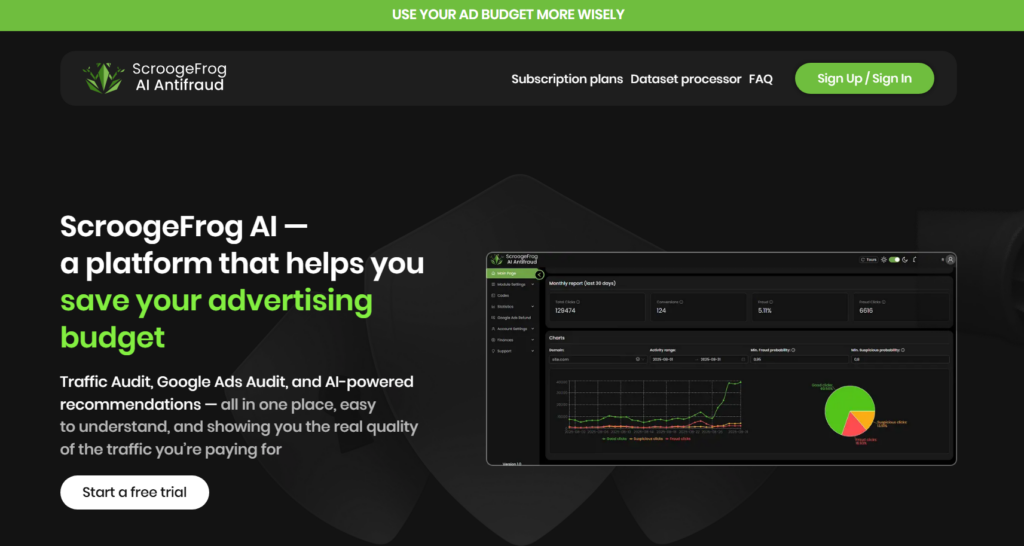
To protect the budget and maximize buying efficiency, we deployed two separate technical solutions working side-by-side:
Scroogefrog AI Antifraud
We integrated the Scroogefrog AI Antifraud code directly onto the client’s landing pages. Operating independently on machine-learning algorithms, it inspected all incoming traffic in real time:
- Behavioral & Technical Scoring: Evaluated behavioral biometrics (cursor micro-movements, tap trajectories, interaction speed) and network parameters (proxy farms, data-center IPs, emulators).
- Real-Time Blocking: Invalid and bot sessions were detected and blocked instantly at the landing level, preventing fraudulent interactions and keeping the client’s analytics clean.
Automated Bidding System
We connected our custom automated bidding system directly to Realpush via API:
- Algorithmic Bid Adjustment: The system calculated optimal CPC bids in real time based on registration performance against the $17.00 target CPA.
- Clean Data Synergy: Because Scroogefrog eliminated bot traffic before registration, our auto-bidding system trained exclusively on genuine human sign-ups, raising bids on placements that delivered real players and suppressing low-converting feeds.
Because our proprietary auto-bidding engine operated exclusively on clean conversion data verified by Scroogefrog, the algorithm never burned budget optimizing for fraudulent placements.
5. Media Planning, Segmentation & Creative Strategy
To prevent auction cannibalization across disparate formats and operating environments, we divided traffic acquisition into 6 isolated campaign funnels:
Device Segmentation
- Push Campaigns (3 funnels): Segregated across Desktop, Android, and iOS.
- Popunder Campaigns (3 funnels): Dedicated instances for Desktop, Android, and iOS.
Isolating operating systems prevented aggregate budget skewing: Android yielded massive scale at rock-bottom clearing prices, iOS brought in higher-LTV players, and Desktop delivered stable conversions during prime evening browsing hours.
Creatives & Landing Strategy

- Push Units: Our in-house design team engineered 5 distinct visual and psychological angles for each segment. Angles tested included gamified slot previews, localized jackpot alerts leveraging regional urgency, and personalized bonus-unlock prompts with countdown elements.
- Popunder Deployments: 1 highly optimized, ultra-lightweight entry point per campaign. Traffic routed directly to interactive wheel-spin prelanders, qualifying user intent and warming prospects before presenting the core registration form.
6. Campaign Execution & Optimization Phases (June 30 – Sept 16)
The 78-day flight followed a disciplined data-calibration roadmap:
Phase 1: Baseline & Data Mapping (June 30 – Mid-July): Ran broad targeting across US placements to collect baseline volume. Scroogefrog flagged high-risk publisher zones, while the postback established initial registration rates per Site ID.
Phase 2: Algorithmic Bid Pruning (Late July – August): Placements with poor registration velocity or high fraud scores were cut into master blacklists. Our in-house engine pushed higher bids on Site IDs showing consistent, verified sign-ups.
Phase 3: Scale & Creative Focus (August – Sept 16): Paused lower-performing Push creatives and funneled budget into top-performing pairs, allowing the system to win high-quality impressions at ultra-low clearing prices.
7. Performance Analytics & Financial Audit
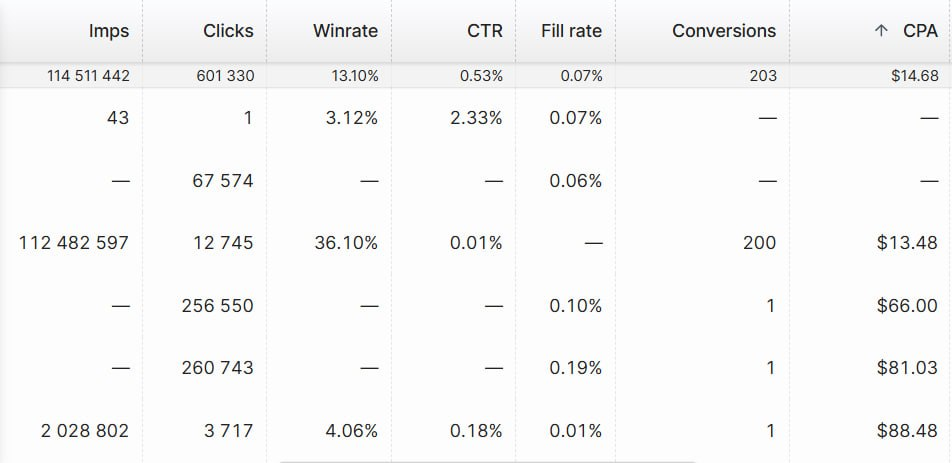
Over the two-and-a-half-month deployment, the campaigns recorded the following aggregate performance metrics:
| Metric | Recorded Value |
| Active Flight Window | 30.06.2026 – 16.09.2026 |
| Total Impressions | 114,382,594 |
| Total Clicks / Visits | 601,317 |
| Average CPC | $0.0049 |
| Conversions (Registrations) | 202 |
| Target CPA | $17.00 |
| Actual CPA | $14.73 |
| CPA Cost Delta | -13.35% (Efficiency Gain) |
Financial Efficiency Breakdown
With 601,317 clicks delivered at an average CPC of $0.0049, total media ad spend was roughly $2,946. Generating 202 confirmed user registrations at an actual CPA of $14.73 beat the advertiser’s target by $2.27 per registration, delivering direct savings of $458.54 on target cost while unlocking 114M+ impressions in a premium Tier-1 market.
8. Strategic Takeaways
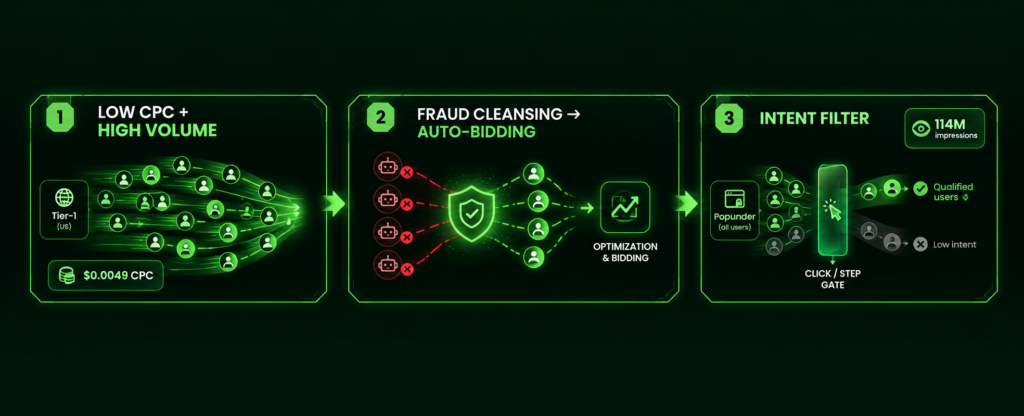
- Tier-1 Volume is Viable at Low CPCs: Common wisdom assumes US iGaming traffic requires expensive premium inventory. By pairing high-volume formats (Push/Popunder) with strict real-time fraud filtering, we acquired legitimate registered players at an average CPC under half a cent ($0.0049).
- Auto-Bidding Requires Verified Signals: Machine-learning bidding models optimize purely on conversion feedback loops. If bot interactions trigger fake sign-ups, algorithms waste budget on compromised placements. Decoupling on-site protection (Scroogefrog) from auction bidding kept the registration data clean and the model accurate.
- Format-Specific Intent Filtering: In Popunder campaigns, interactive prelanders acted as an essential friction layer. Forcing users to interact before hitting the registration form filtered out low-intent misclicks, keeping the funnel lean and conversion rates steady across 114M impressions.
Ready to Scale Your Campaigns Cleanly?

Scaling aggressive ad formats in high-competition markets requires more than just ad budget – it demands resilient account infrastructure and automated traffic verification to protect every dollar spent.
Need agency advertising accounts and end-to-end campaign infrastructure?Get in touch with our team to scale your ad operations with stable limits and full setup support:
👉 Contact ScroogeFrog Agency
Looking specifically for real-time protection against bots and click fraud?Integrate our AI-driven fraud prevention platform to clean incoming traffic on the fly and feed your bidding algorithms only valid human data:
👉 Explore Scroogefrog AI Antifraud