🐸BUILDING NEXT-GEN AI ANTI-FRAUD: INSIDE LOOK FROM OUR CTO AT KYIV AI DAY 2026 MAIN🔎

In digital marketing and affiliate media buying, anti-fraud is still widely treated as a static end-of-month report – something opened once a month to mourn wasted ad budgets. At ScroogeFrog, we take a fundamentally different approach: anti-fraud is a continuous, high-load engineering process that must adapt to threats faster than fraudsters invent new schemes.
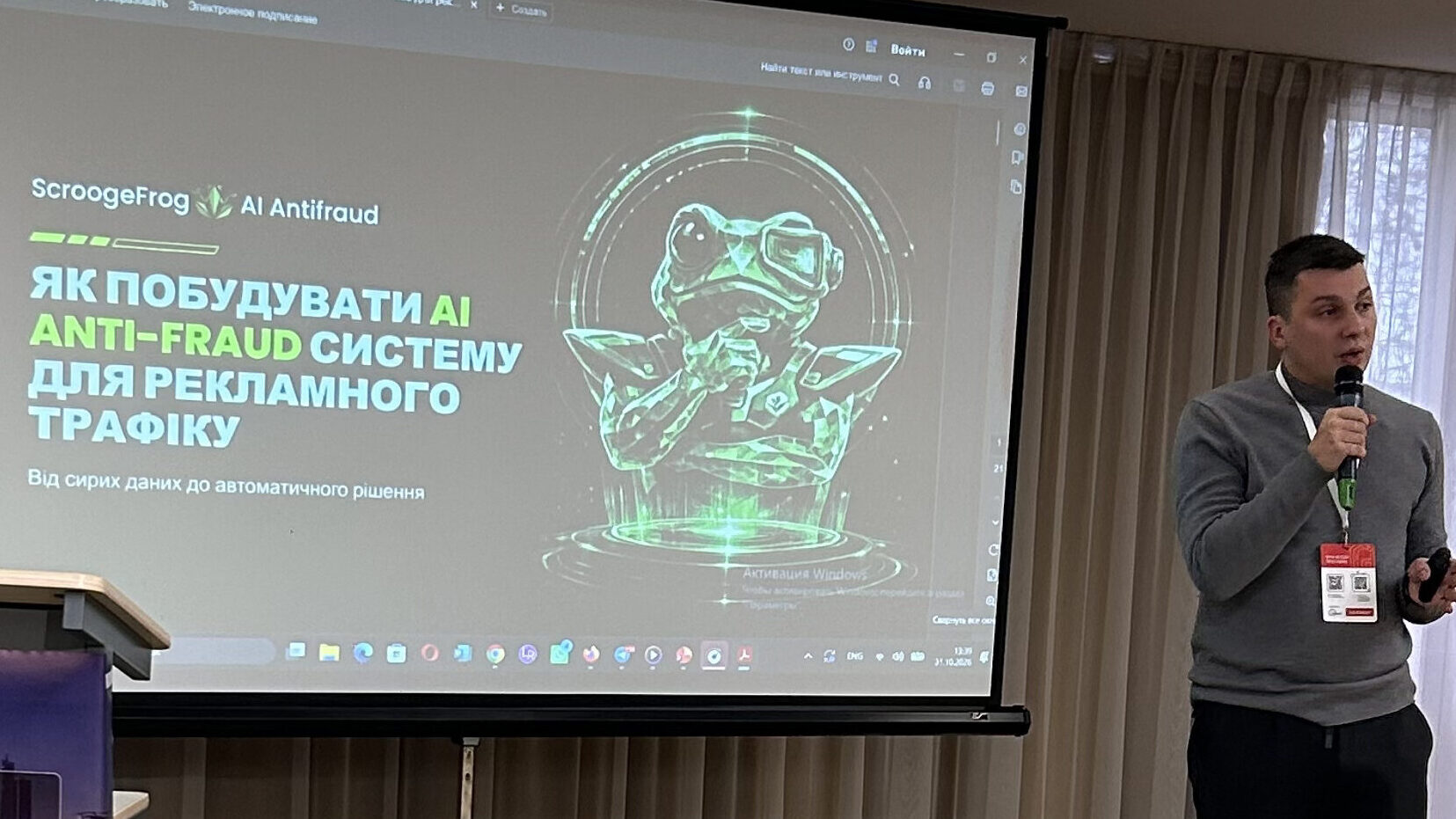
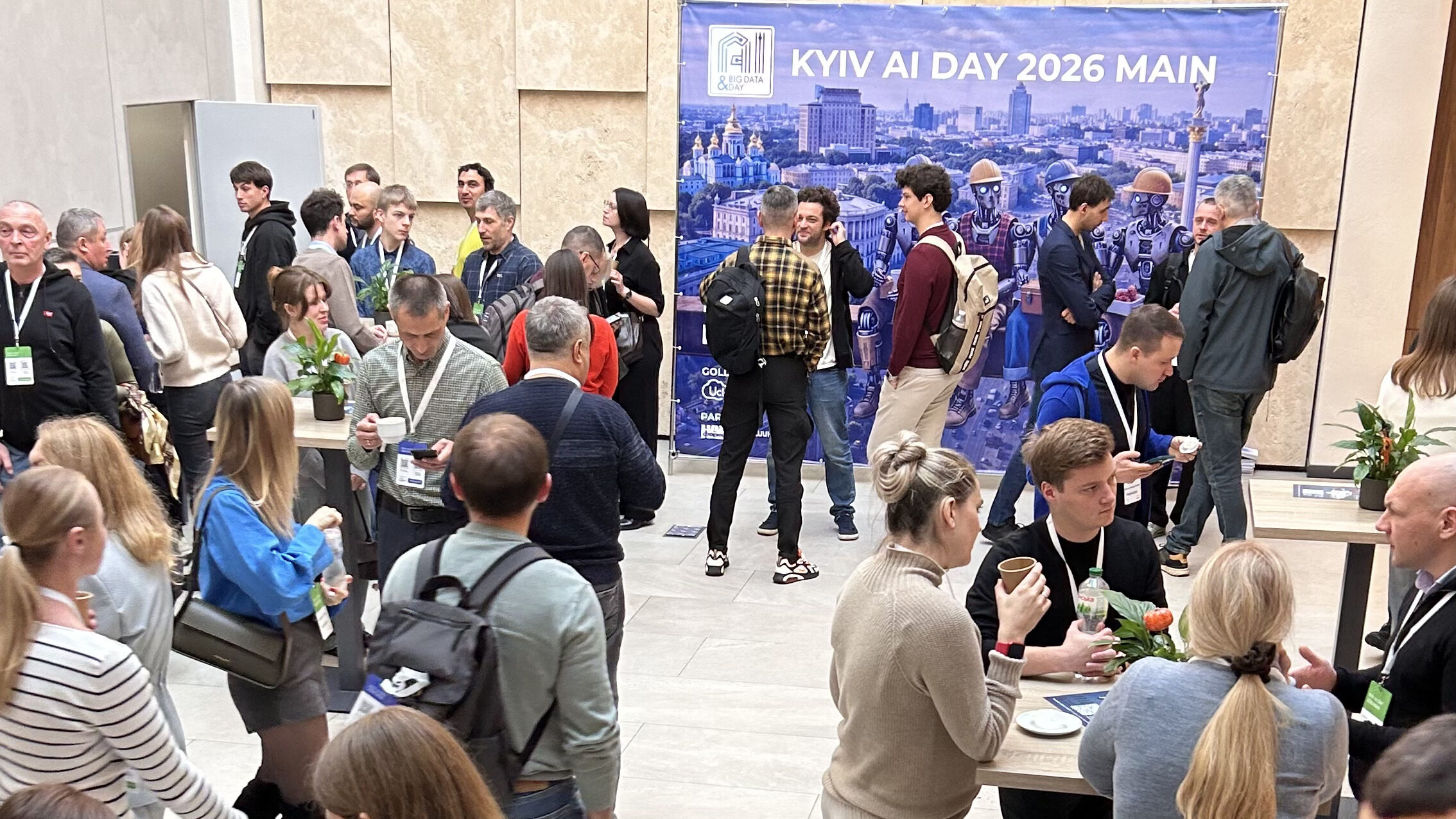
At Kyiv AI Day 2026 Main, our CTO Maksym took the stage to unpack what’s under the hood of our AI system architecture. Here are the key engineering lessons and core principles behind building modern AdTech security.
Why Traditional Rule-Based Anti-Fraud Fails in 2026
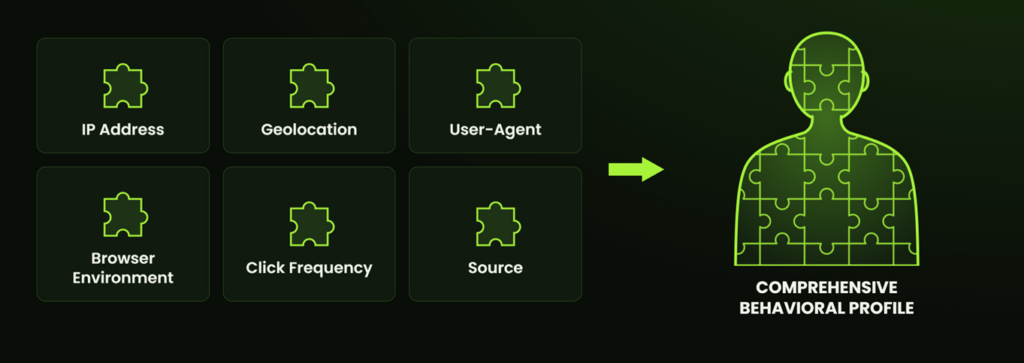
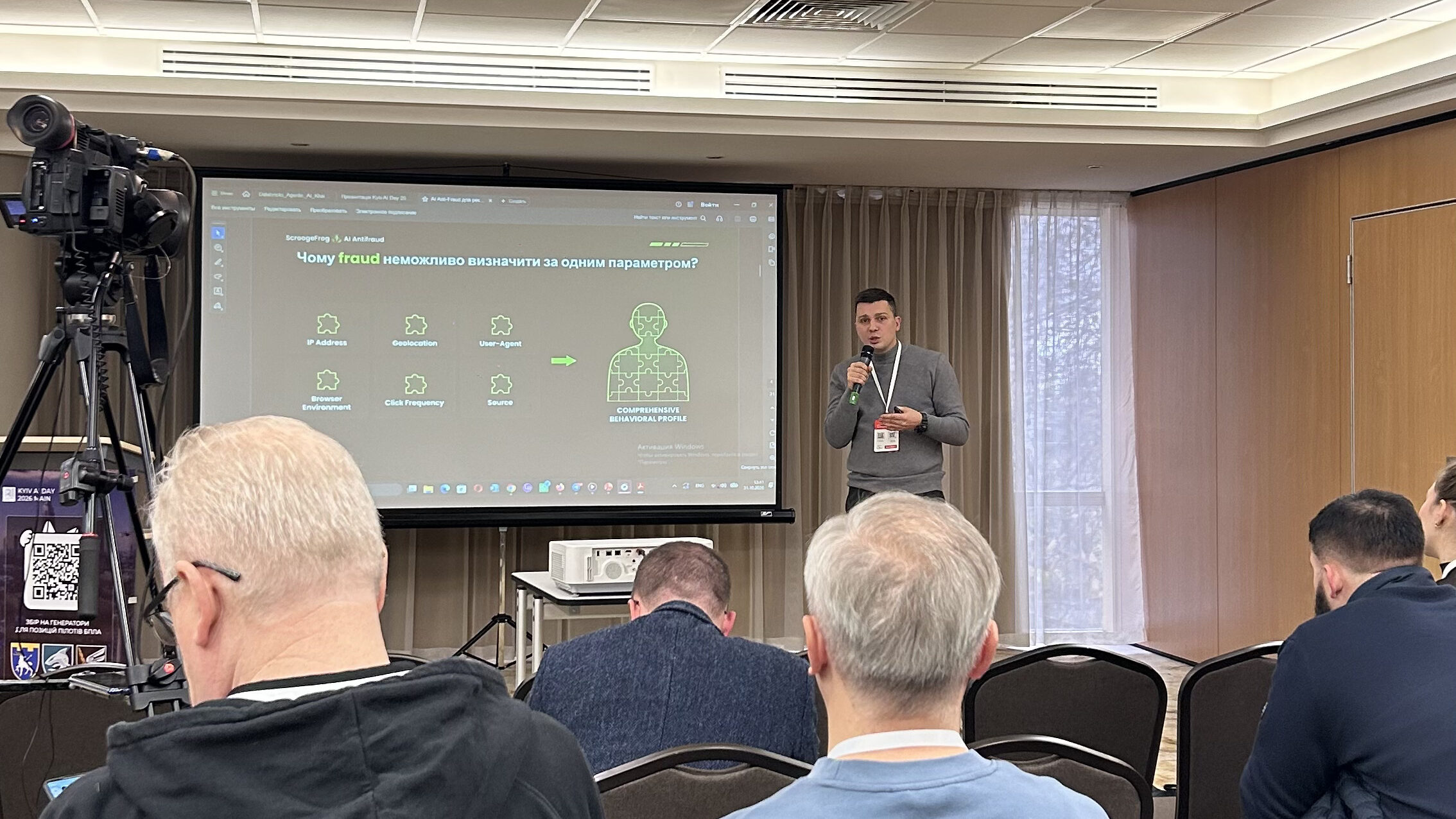
Traditional ad traffic analysis historically relied on static rule engines: checking isolated parameters like IP addresses, User-Agents, or click frequency. While that worked against primitive bots, ad fraud today has become highly adaptive.
Modern automated fraud systems distribute activity across thousands of rotating IPs, emulate realistic cursor movements, and space out sessions over time. As a result, every single click satisfies basic static rules and looks completely legitimate on its own, even though the aggregated activity is blatantly malicious. That is why it is critical to distinguish general Invalid Traffic (IVT) from intentional fraud and move away from independent parameter checks toward deep behavioral pattern analysis.
From 60+ Signals to a Complete Behavioral Profile
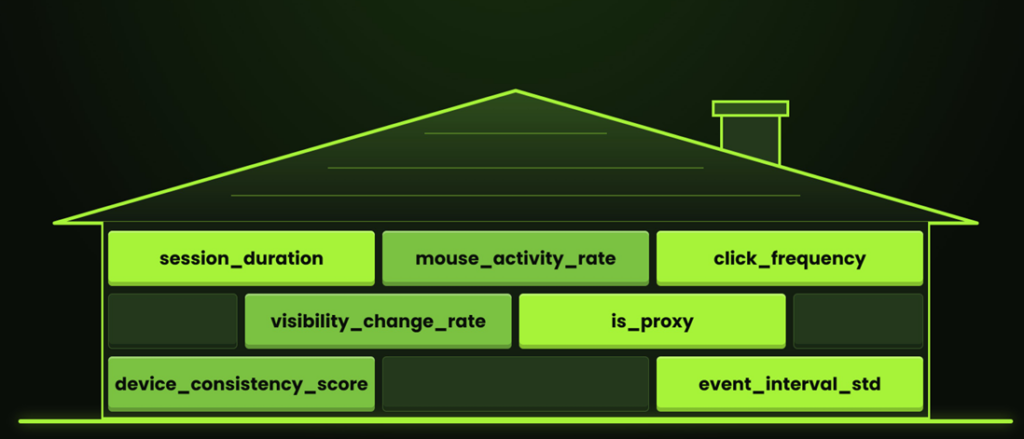
To detect complex fraud, we abandoned isolated metric evaluation. ScroogeFrog AI captures over 60 distinct signals simultaneously to construct a comprehensive behavioral profile for every session.
We analyze network parameters (ASN, JA4 TLS fingerprints), device attributes (Canvas/WebGL rendering, font anomalies), session dynamics, interaction events (cursor trajectories, acceleration, scroll patterns, micro-pauses), and advertising context.
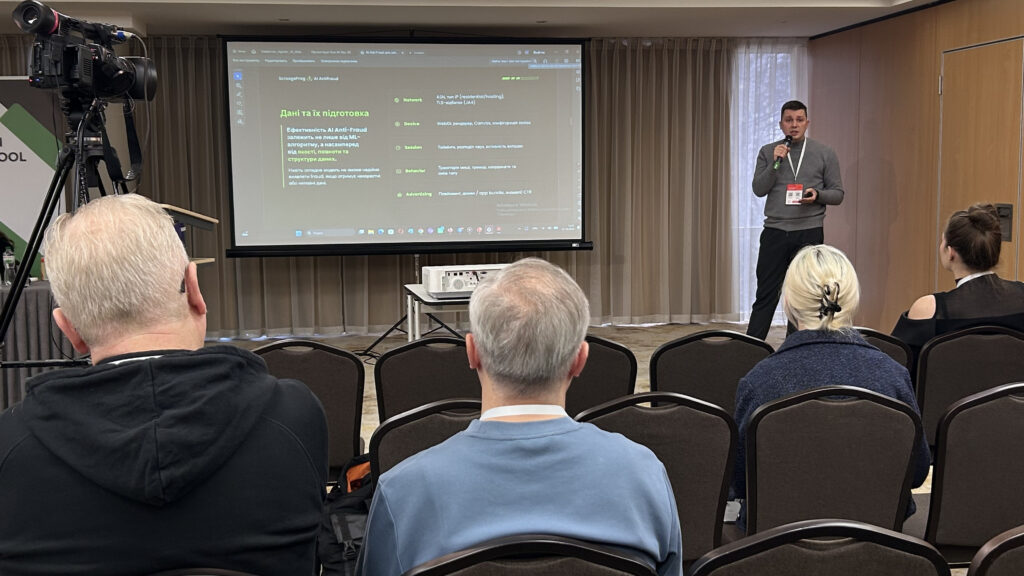
The cornerstone of this process is Feature Engineering. For instance, the mere presence of a mousemove event proves nothing because modern bots simulate movement. However, analyzing angular acceleration and velocity variance clearly separates human mechanics from a bot’s mathematical vectors.
System Architecture: From Raw Data to the Decision Layer
From an engineering perspective, ScroogeFrog AI operates as an end-to-end, high-throughput pipeline:
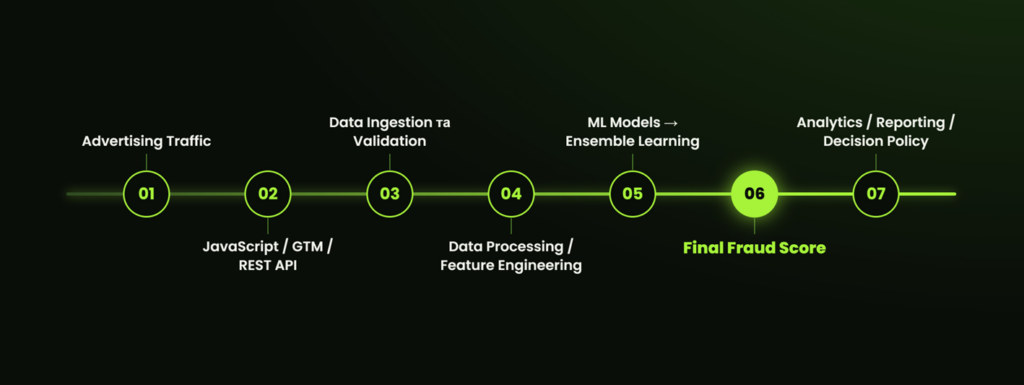
When a user visits a landing page, the system immediately tags the session, links incoming events, and processes them across distributed infrastructure.
The core architectural principle here is the decoupling of ML Prediction and Business Decision:
- ML Prediction generates a Fraud Risk Score – a continuous probability rating (0 to 1), acknowledging that ad traffic is rarely strictly binary.
- Business Decision Layer translates that probability into real-time actions dictated by specific client business logic: Allow, Monitor, Review, or Block.
This architecture offers flexible calibration: some businesses prioritize minimizing False Positives to protect legitimate leads, while others enforce strict thresholds to cut off any suspicious clicks instantly.
Tailored AI Models for Specific Niches and Domains
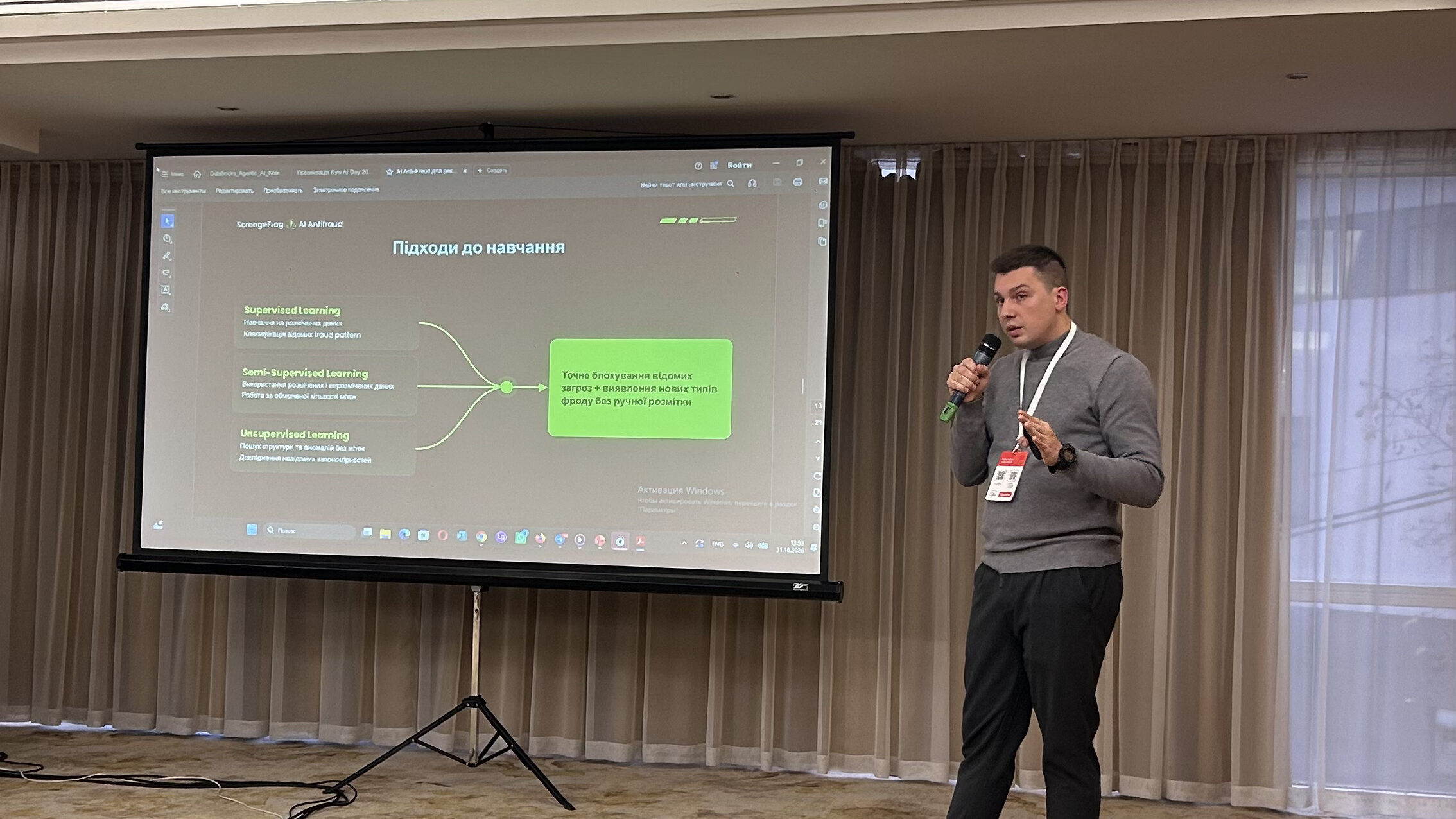
There is no single global ML algorithm that models the entire internet effectively. Traffic patterns across e-commerce, iGaming, SaaS, or lead generation behave completely differently.
ScroogeFrog allows training custom ML models optimized for specific domains and target actions across three tiers:
- General Model – Our baseline exploratory model.
- Trust-Only Model – Trained exclusively on verified legitimate client traffic to detect subtle deviations from normal baseline behavior.
- Hybrid Model (Trust + Fake) – Trained on both clean conversions and identified fraud sources to maximize classification accuracy.
Production, Geo-Distributed Infrastructure, and Model Drift
Building a functional model in a Jupyter Notebook accounts for only 20% of the challenge. The real test is engineering production infrastructure capable of high-throughput traffic scoring.
Because ad traffic originates globally, our processing servers are deployed across multiple geographic regions to maintain minimal latency during signal collection.
Furthermore, we continuously track Model Drift. New browser releases, emerging devices, and updated bot frameworks cause historical accuracy to degrade over time. We continuously monitor prediction drift and re-validate models against fresh data to maintain peak precision.
The Next Frontier: Real-Time Detection and RTB
Today, ScroogeFrog delivers robust CPC Anti-Fraud and deep campaign analytics. The next phase of our engineering roadmap targets Real-Time Detection during programmatic ad auctions (RTB).
The primary engineering challenge in RTB is latency: at the moment of a Bid Request, post-click behavioral events do not yet exist. Bidding decisions must be executed in milliseconds relying solely on pre-bid network and contextual signals.
Summary
At ScroogeFrog AI, the core operational cycle follows a clear logic:

Anti-fraud is no longer a post-mortem report reviewed after budgets are spent – it is an active, real-time optimization tool built to preserve ad spend and scale true ROI.
The audience welcomed the talk with great enthusiasm!
Straight off the stage, Maksym and Natalia jumped into networking to share insights and discuss real cases with the community! 👏
Huge thanks to the organizers and everyone for the amazing energy!😉🤝
#ScroogeFrog #KyivAIDay #AntiFraud #AI #AdTech #Networking